
Google plans to invest $15 billion over the next five years in setting an artificial intelligence hub in Visakhapatnam, a senior official of the company said on Tuesday.

Foreign brokerages remain cautious on the road ahead for the Indian equity markets. Though analysts at Nomura have revised their March 2026 Nifty target to 26,140 levels from the earlier 24,970, but the upside from the current levels is a modest 6 per cent. BofA Securities, on the other hand, has not made any change to its year-end Nifty target.

Finance Minister (FM) Nirmala Sitharaman has presented a forward-looking Budget, reinforcing the government's commitment to 'Reform, Perform, and Transform'.

On the back of robust tax collection, the ratio of direct taxes to gross domestic product (GDP) this financial year is likely to be the highest in this century so far. This, along with strong goods and services tax (GST) collection, may drive up receipts from central taxes as a proportion of GDP to the highest level or close to the highest since 2008-09 despite subdued excise and customs duty receipts. This will be due also to lower nominal GDP projected in the first advance estimates for 2023-24.
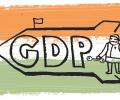
Discrepancies in computation of advance estimates of the country's Gross Domestic Product for 2023-24 stood at Rs 2.59 lakh crore as against (-) Rs 3.80 lakh crore in 2022-23 and (-) Rs 4.47 lakh crore in 2021-22, according to National Statistical Office (NSO). On Friday, the NSO released its first advance estimates of national accounts which showed that the Gross Domestic Product (GDP) or Indian economy will grow at 7.3 per cent in 2023-24, slightly higher than 7.2 per cent in 2022-23.

'...how do they consume and contribute to the GDP?'

Asian Development Bank on Thursday pegged India's economic growth at 7.4 per cent for 2004 and said high growth is likely to be sustained in medium term.
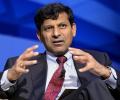
Former Reserve Bank Governor Raghuram Rajan said India will still remain a lower middle country if the potential growth rate remains at 6 per cent annually without any rise in population by 2047 (Amrit Kaal) and will be reaching the end of the demographic dividend by then. Speaking at a programme organised by Manthanon on Saturday, the economist said if the country does not grow faster, it will grow older (demographically) before it gets richer, which means there is the burden of an aging population to deal with also at that point. Rajan said the GDP growth in India for the past two quarters was in the region of 7.5 per cent and if one looks at the labor force participation, it is very low and when it comes to female participation, "it is the lowest in the G20".

Shiv Nadar and family donated Rs 2,708 crore (Rs 27.08 billion) in 2024-2025.
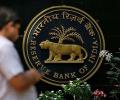
The Reserve Bank of India (RBI) on Friday cut the repo rate by 25 basis points to 6.25 percent, marking the first reduction in five years. The central bank also projected GDP growth for fiscal year 2026 at 6.7 percent and inflation to come down to 4.2 percent in FY26 from 4.8 percent in FY25. The RBI said the global economic backdrop remains challenging but the Indian economy continues to remain strong and resilient.
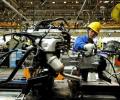
Exports have been a drag on the economy for some time as shipments have declined on weak external demand.

RBI expects the growth in the next fiscal to strengthen gradually, notwithstanding the significant headwinds.

Indian stock markets have experienced some ups and downs in the first half of 2025. However, both the Nifty 50 and Sensex saw steady gains, supported by a healthy economy and better corporate earnings. In this article, we will look at the detailed performance of these key indices and explore the sectors that drove the market rally.

The Reserve Bank of India on Wednesday retained its growth projection at 7.2 per cent for the current fiscal on the back of improvement in urban demand and gradual recovery in rural India. Unveiling the third monetary policy for the current fiscal, RBI Governor Shaktikanta Das said the Indian economy remained resilient, and the central bank will continue to support growth. The RBI expects growth in the first quarter of the current fiscal at 16.2 per cent, which will taper to 4 per cent by the fourth quarter.

The Reserve Bank of India's (RBI) Monetary Policy Committee's (MPC) decision to cut the repo rate by 50 basis points (bps) to 5.5% was contrary to the expectations of many economists. Firstly, most of the economists expected the MPC to cut the repo rate by 25 bps citing the weakening of inflation, prospects of economic growth, geopolitical uncertainty and comfortable system liquidity.
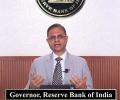
'India has the potential to grow at more than 7%, with the monetary policy providing a supportive hand.'
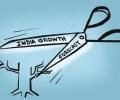
Moody's on Friday slashed India's GDP growth projections for 2022 to 7 per cent from 7.7 per cent earlier as the global slowdown and rising domestic interest rates will dampen economic momentum. This is the second time that Moody's Investors Service has cut India's growth estimates. In September, it had cut projections for the current year to 7.7 per cent from 8.8 per cent estimated in May. "For India, the 2022 real GDP growth projections have been lowered to 7 per cent from 7.7 per cent.

In trade negotiations, as in chess, sometimes you need to accept a temporary disadvantage to secure a better long-term position, points out Sonal Varma, chief economist (India and Asia ex-Japan) at Nomura.

'Indian markets may underperform global peers for the next two quarters.' 'But beyond that, India should catch up and resume its long-term growth path.'

Budget 2025-26 delivers a carefully calibrated strategy-stimulating demand and investment while keeping fiscal discipline intact. In an environment marked by global trade disruptions, and a softening in urban consumption, Finance Minister Nirmala Sitharaman has taken a measured approach.
The higher outlay for the Commonwealth Games would aid the hotel sector in faster execution of the projects in the NCR region.

Fitch Ratings on Monday said India's pace of debt reduction is gradual, leaving room for a downside risk to sovereign rating in the eventuality of a significant economic shock. However, the rating agency expressed confidence in India's ability to stick to its medium-term fiscal framework, which aims to reduce debt and bring it on a downward trajectory over time.

Movement in the equity market this week will be guided by a host of macroeconomic data announcements, global trends and trading activity of foreign investors, analysts said. Stocks markets concluded the last week on a subdued note, as investors grappled with global uncertainties.

The RBI under former governor Shaktikanta Das resisted pressures to cut interest rates through 2024 as it kept its 'Arjuna's eye' trained on inflation, but the central bank under a new detail-oriented head will soon have to take a call if it can continue sacrificing growth. Das, a career bureaucrat who in 2016 oversaw Prime Minister Narendra Modi's highly disruptive demonetisation move, left a lasting legacy as he demitted office towards the end of 2024 after expertly navigating monetary policy for six years, the highlight of which was steering India's recovery through the pandemic.

'...then preparing oneself for the long haul is also essential.' 'Identifying and holding onto values gives you strength to withstand the difficulties enroute.' 'Taking care of your physical, mental, and intellectual well-being gives you the strength to stay the path.'
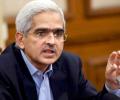
The December meeting of the Reserve Bank of India's (RBI's) six-member Monetary Policy Committee (MPC) will start on Wednesday even as there is no clarity on whether Governor Shaktikanta Das, the chair of the panel, will continue in office after his term ends next week. The outcome of the meeting will be announced on Friday by Das at 10 in the morning.
.jpg)
The GDP numbers destroy any hopes of an economic rally prior to the elections, and the installation of a new government.

The Union Budget's focus on capital expenditure is expected to crowd-in private investment and push the GDP growth rate close to 7 per cent in the next financial year beginning April 1, said a Reserve Bank article on 'State of the Economy'. In 2023-24, capital expenditure is budgeted at Rs 10 lakh crore which will constitute 3.3 per cent of GDP. "We believe that India will decouple from macroeconomic projections of current vintage and also from the rest of the world.

Prime Minister Narendra Modi urged CEOs of US majors to take advantage of India's growth story as the country is making all efforts to become the third largest economy of the world in his third term. India is currently the fifth largest economy of the world after the US, China, Germany and Japan with a GDP of around $3.9 trillion. India has been the fastest growing large economies of the world with GDP growth rate of over 7 per cent for the last three consecutive years.

China's GDP grew by 4.9 per cent in the third quarter, down from 7.9 per cent in the second, confirming the slowdown of the world's second-largest economy which was under pressure from the crisis-hit property sector, curbs on energy and tardy recovery from the Covid-19 pandemic.

Multiple tailwinds for the automobile sector, including a cut in goods and services tax (GST) rates, are keeping analysts bullish on auto stocks from a long-term perspective, even as they see the rally running its course in the near term.

The country's biggest carmaker, Maruti Suzuki India, has raised concerns about the continuing slide in small car sales.
The Reserve Bank has projected the economy to grow by 8-8.5 per cent in 2008-09. Inflation will be brought under 5.5 per cent, RBI said.

'India may never fully participate in the AI hype cycle, but we can position ourselves to benefit from its inevitable disenchantment and the cycle of disillusionment,' alerts Akash Prakash.

The economy may grow by around 7 per cent this financial year as estimated by the Monetary Policy Committee (MPC) of the Reserve Bank of India (RBI), say economists with various organisations. The first advance estimates for 2023-24 will be released on Friday by the National Statistical Organisation (NSO), an exercise done for calculating ratios such as the fiscal deficit. The interim Budget will be presented on February 1.

In a double-dose bid to boost growth and employment prospects, the Union Cabinet on Tuesday approved a Rs 2.07 trillion outlay for a research development and innovation (RDI) Scheme to fund private sector innovations, and an employment-linked incentive (ELI) to create over 35 million new jobs over the next two years.

Foreign investors continue to show confidence in the country's equity market, infusing Rs 14,167 crore so far this month, largely driven by favourable global cues and robust domestic fundamentals. Notably, this inflow has come despite the ongoing military tensions between India and Pakistan.

'I do believe there will be a resolution in the next couple of months on the penal tariff and hopefully on the reciprocal tariff also.'

For growth sustain at these levels, private services need to recover.
The full year economic growth for the fiscal year 2012-13 came in at 5 per cent, in line with an official forecast given in February, but its worst in a decade, and a far cry from the 9 per cent annual expansion recorded until two years back.
